The Best Handgun Ammo for Self-Defense, Target Practice, and Stopping Power
You’re at the range, slide locked back, and you load a fresh magazine with rounds that feel solid and reassuring in your palm. Handgun ammo is a self-contained cartridge—a bullet, gunpowder, casing, and primer—that ignites to push the projectile down the barrel when the firing pin strikes. The right bullet weight and type, like a 6.5x57R Ammo for Sale 9mm hollow point for defense or a full metal jacket for practice, directly affect accuracy and stopping power. Pick a load that cycles reliably in your pistol, and you’ll get consistent shot placement with every trigger pull.
What Actually Matters Inside a Box of Pistol Cartridges
Inside a box of pistol cartridges, what actually matters is the consistency of the charge weight and the bullet seating 6.5×55 Swedish Ammo for Sale depth, not the brand logo. For handgun ammo, these two variables dictate pressure uniformity, which directly translates to point-of-impact stability and reliable cycling across your magazine. A cartridge that passes the “shake test” with no powder rattle, and whose bullet resists light thumb pressure, is a sign of proper crimp and case tension. Consider that bullet setback from repeated chambering is a silent accuracy killer, as it spikes pressure unpredictably. Prioritize lots with sealed primers and case mouths for carry ammo, ensuring moisture and oil intrusion won’t degrade ignition. Finally, verify that the overall cartridge length feeds cleanly from your specific pistol’s feed ramp—an OAL that is book-perfect but ramp-incompatible is worthless in your hand.
Breaking Down Primer, Powder, and Projectile Roles
The primer, powder, and projectile each perform a distinct, non-negotiable function inside a handgun cartridge. The primer, struck by the firing pin, initiates ignition by producing a hot flash that ignites the powder charge. The powder then burns at a controlled rate, generating rapidly expanding gas; its burn speed determines pressure curves and how quickly the bullet accelerates. Finally, the projectile is the only component that leaves the barrel, with its weight and construction dictating penetration and expansion. Understanding these three roles is essential for handgun ammo reliability and performance. An imbalance—too slow powder, a hard primer, or an over-weighted bullet—can cause malfunctions or poor terminal effect.
| Component | Primary Role | Failure Consequence |
|---|---|---|
| Primer | Ignites powder via impact flash | Click, no bang (misfire) |
| Powder | Burns to create propellant gas | Inconsistent velocity or squib load |
| Projectile | Delivers energy and penetrates target | Keyholing or inadequate depth |

Why Bullet Weight Feels Different at the Trigger
Heavier bullets recoil like a slow shove, while lighter ones snap—and you feel that difference the instant the trigger breaks. A 147-grain round generates a longer pressure curve, delaying the slide’s rearward travel, which makes the trigger reset feel mushier and less distinct. Conversely, a 115-grain load peaks faster, producing a sharper, quicker impulse that translates into a crisper, more tactile trigger break. This perceived change isn’t in the trigger itself—it’s the gun’s frame twisting and dipping under differing recoil momentum, altering your finger’s contact point mid-pull. The heavier bullet’s torque can pull your sights off-axis, forcing you to reacquire the trigger’s wall subtly; lighter loads let you hold that wall more steadily.
How to Match Ammunition to Your Pistol’s Purpose
When you pick handgun ammo, your pistol’s job decides the load. For concealed carry, choose a jacketed hollow point that expands reliably through clothing—test a box through your specific barrel to confirm feeding. At the range, run full-metal-jacket rounds to save money while practicing recoil control, since they mimic the weight of your defense load. For hunting or steel matches, select a heavier bullet with a flat nose or bonded core, ensuring it cycles with your recoil spring. Match the velocity to your slide’s dwell time—too slow fails to eject, too fast peens the frame. Your pistol’s purpose dictates everything from bullet weight to crimp. So, if you only shoot paper, why carry +P loads that batter your gun? Ask yourself: does this box serve the exact scenario I’m preparing for? Only then load your magazine.

Range Practice Loads vs. Personal Defense Rounds
Choosing the right handgun ammo means understanding that range practice loads and personal defense rounds serve opposite masters. Full metal jacket .35 Remington Ammo for Sale (FMJ) practice ammunition is affordable, reliable, and perfect for honing your trigger control and sight alignment, but it lacks the expansion needed to stop a threat. Defensive rounds, like jacketed hollow points, are engineered to expand upon impact, transferring maximum energy while minimizing over-penetration risks. However, their premium cost and increased recoil make them impractical for daily practice. The smart strategy is to train extensively with FMJ for proficiency, but fire a few boxes of your exact carry load periodically to confirm zero and manage the distinct recoil impulse. Your pistol’s purpose dictates the balance—practice to build muscle memory, but carry what saves lives.
Choosing Between Full Metal Jacket and Hollow Point Tips
Choosing between full metal jacket (FMJ) and hollow point (HP) tips starts with your pistol’s primary role: target practice versus personal defense. For range work and drills, FMJ rounds offer reliable feeding, lower cost, and predictable penetration, making them ideal for honing accuracy and malfunction clearance. For defensive carry, hollow points expand upon impact, creating a larger wound channel while reducing the risk of over-penetration through walls or barriers. The trade-off hinges on terminal performance versus training economy, not raw power. FMJ lacks expansion, so it can pass through a threat, endangering bystanders. HPs, however, may fail to expand through heavy clothing or drywall, so test your chosen defensive load in your specific barrel. Match the tip to the threat scenario, not to trends. Q: Should I carry FMJ or hollow points for self-defense? A: Hollow points, because their controlled expansion maximizes stopping power while .32 Win Special Ammo for Sale lowering collateral risk. Always verify HP feeding reliability in your magazine and slide.
Caliber Basics: Picking the Right Size for Your Needs
Start with the reality that handgun caliber is a trade-off between control, capacity, and stopping power. For most defensive needs, 9mm offers the best balance: manageable recoil, higher magazine capacity, and modern bullet technology that compensates for its smaller diameter. If you have limited hand strength or shoot one-handed, a .380 ACP reduces muzzle flip but sacrifices penetration on heavy clothing. Conversely, .40 S&W and .45 ACP deliver larger wound channels but demand a firmer grip and slower follow-up shots. Match the cartridge to your physical ability, not marketing hype. Test fire before buying: a gun you shoot accurately with 9mm beats a .45 you flinch with. Q: For a new shooter, is 9mm always the right pick? A: Not if they struggle with grip strength—then a .380 in a heavier frame often teaches fundamentals better. Ultimately, caliber basics mean choosing the largest round you can shoot consistently without fatigue, because placement beats power every time.
Recoil Management and Control Across Common Chamberings
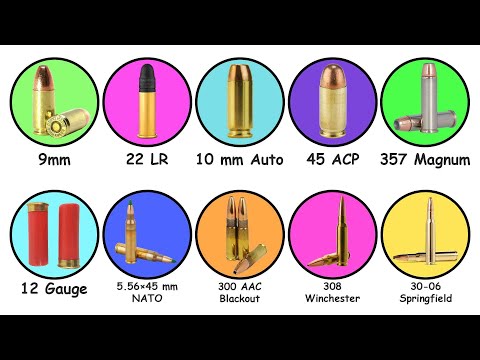
Recoil management across common handgun chamberings is a direct function of cartridge pressure curves, projectile mass, and frame weight, creating a predictable hierarchy of control difficulty. In 9mm Luger, the moderate impulse allows most shooters to maintain sight alignment during rapid fire, making it the practical benchmark for manageable muzzle rise. Stepping up to .40 S&W and .45 ACP introduces a sharper, heavier push that demands a firmer grip and active wrist locking to prevent the muzzle from torquing off target, especially with compact polymer frames. Conversely, .22 LR and .380 ACP produce negligible recoil, which aids follow-up shot speed but can mask poor trigger discipline. The key to mastering any chambering lies in consistent grip pressure and stance adaptation, not raw strength. **Recoil mitigation through grip mechanics** remains the most effective variable a shooter controls.
Q: Why does 9mm feel snappier than .45 ACP despite having less total recoil?
A: 9mm typically uses lighter bullets at higher velocities, generating a faster, sharper impulse that peaks quickly, whereas .45 ACP’s heavy bullet delivers a slower, longer push. That higher peak force in 9mm translates to a snappy felt kick, while .45’s sustained thrust feels more like a shove, making muzzle control feel different even if total energy is similar.
Penetration Depth and Stopping Power in Real Scenarios
Penetration depth dictates whether your round reaches vitals through barriers like denim, drywall, or heavy coats, while stopping power is the physiological result of that depth meeting critical structures. In real defensive scenarios, a bullet that stops at 8 inches in gel may fail to sever an aorta behind a ribcage, yet one exceeding 18 inches risks over-penetration, endangering bystanders. Balancing penetration and stopping power means choosing a load that consistently achieves 12–16 inches in calibrated gel—enough to disrupt central nervous system tissue or major vessels from oblique angles. Expansion that petals too early sacrifices depth; bonded or jacketed hollow points preserve both. Q: Why does penetration matter more than raw muzzle energy? A: Because energy without adequate depth only bruises superficial muscle—only a round reaching heart, spine, or major arteries reliably ends a threat fast.
Reading the Box: Velocity, Energy, and Pressure Numbers
The numbers on a handgun ammo box translate directly to practical performance. Velocity, energy, and pressure readings are your primary reference Ammunition for Sale for how the cartridge will behave. Velocity, listed in feet per second, dictates the bullet’s trajectory and its impact timing, influencing both recoil impulse and point of impact at varied distances. Energy, usually in foot-pounds, quantifies raw downrange force, helping you assess if the load suits your intended target. Pressure, measured in psi or CUP, is the critical safety and cycling parameter; a load that exceeds your firearm’s tolerance can be dangerous. When reviewing ballistics data on handgun ammo, compare these three figures together—a fast load with high pressure may not be worth the extra energy if it spikes felt recoil or strains your pistol’s action.
What Muzzle Energy Tells You Before You Fire
Before you fire, muzzle energy predicts recoil impulse and target effect, not trajectory. A higher figure signals more felt kick and deeper penetration in ballistic gel, useful for defensive loads. A lower number suggests softer shooting, aiding follow-up accuracy in compact pistols. It also flags whether a round suits steel targets or barrier penetration—excessive energy risks over-penetration, while too little may fail to cycle a slide reliably. Check energy against your firearm’s spring weight and intended distance; energy consistency across lot numbers hints at powder uniformity, affecting point of impact.
- Compare energy to recoil spring rating for reliable cycling.
- Match energy to target medium—gel, steel, or clothed barriers.
- Use energy minimums for defensive ammunition standards (e.g., 220 ft-lbs).
Low-Pressure Loads vs. +P Rounds for Specific Frames
Frame metallurgy dictates real pressure ceilings, not just box labels. Low-pressure loads for specific frames matter most with alloy or older steel revolvers, where +P ammunition accelerates frame stretching and cylinder erosion. Conversely, modern stainless or forged carbon steel frames—like heavy-duty .357 Magnum models—handle +P .38 Special with negligible wear, but shooting them exclusively still increases forcing-cone stress. A 148-grain wadcutter at 750 fps generates roughly 10,000 psi, while a +P 125-grain JHP may exceed 18,000 psi. That gap translates to sharper recoil impulse and faster timing wear. For aluminum-framed snubbies, stick to standard pressure; for beefy service pistols, +P is safe but offers marginal velocity gain—often under 80 fps—at the cost of part fatigue. Choose based on frame https://specialtysportsandsupplyltd.com/ weight and documented proof-test ratings, never marketing hype.
Getting Consistent Accuracy From Your Carry or Range Gun
To get consistent accuracy from your carry or range gun, you must first lock in one handgun ammo load and stick with it for all practice and qualification drills. Switching between bullet weights or case materials shifts your point of impact, so zero your sights to a single specific load and never deviate. Verify your ammo’s velocity consistency by firing five-round groups from a supported rest at 15 yards; a tight spread means the cartridge’s powder charge is uniform. Check the cartridge overall length—rounds that vary by even a few thousandths can cause feeding hiccups that ruin a shot string. For defensive loads, run at least 200 rounds .338 Lapua Ammo for Sale of that exact batch through your gun to confirm it cycles under recoil and maintains accuracy when the slide heats up. Finally, clean your bore after every range session, because copper fouling erodes shot-to-shot precision faster than any other variable.
Testing Multiple Brands to Find Your Firearm’s Preference
Your handgun is a precision instrument with its own unique throat, rifling, and recoil impulse, so it will digest some loads far 6.5x57mm Mauser Ammo for Sale better than others. Instead of assuming a premium price tag means perfection, dedicate a range session to buying several boxes of different brands—from budget-friendly white-box to defensive hollow points—in your exact caliber. Shoot for groups from a rested position, not just off-hand, and track each brand’s point of impact shift alongside its felt recoil. A round that prints tight clusters at 15 yards while cycling smoothly is your winner. This is how you find your load-specific accuracy baseline, which then lets you practice with cheaper bulk ammo that mirrors that same bullet weight and velocity, keeping your carry gun’s zero reliable when it matters most.
Limp Wristing and Grip Techniques That Affect Point of Impact
A loose, limp wrist grip allows the firearm’s frame to rearward travel excessively, converting recoil energy into vertical muzzle rise .32 ACP Ammo for Sale and altering the barrel’s alignment before the bullet exits. This shifts point of impact upward, while a high-thumb grip can torque the frame laterally, driving shots low-left for right-handed shooters. Conversely, an overly tight support-hand grip creates counter-torque that biases impact down-right. To preserve consistent zero, apply equal 60/40 pressure between strong and support hands, ensuring the wrist remains locked and the bore axis stays perpendicular to the target throughout the trigger press. Ammunition with heavier bullets exacerbates these errors due to increased recoil impulse.
- Rotate your support hand slightly forward to counteract muzzle flip without changing point of impact.
- Test your grip with defensive ammo, as weaker loads hide limp wristing that hotter rounds expose.
- Grip higher on the backstrap to reduce felt recoil and maintain a stable point of impact.
Storage and Care Tips to Keep Your Rounds Reliable

To keep your handgun ammo trustworthy, store it in a cool, dry place with stable temperatures, as extreme heat or cold can degrade powder and primers. Use sealed ammo cans with desiccant packs to combat humidity, which causes corrosion on brass and steel casings. Rotate your carry ammunition every six to twelve months, since repeated chambering can dent bullets or set them back into the case, raising pressure risks. Inspect rounds periodically for tarnish, cracks, or loose primers, and discard any damaged cartridges immediately. Avoid storing loose rounds where they rattle against each other, as this can shave bullet coatings. Finally, keep ammo in original factory boxes or labeled trays to prevent mix-ups with reloads, ensuring every round you load remains dependable for reliable ammunition performance and long-term handgun ammo reliability.
How Heat and Humidity Change Ammunition Performance
Heat accelerates the chemical breakdown of propellants, raising chamber pressures beyond safe specs and causing erratic velocity spikes. Humidity introduces moisture that corrodes primers and degrades powder, leading to hang-fires or squib loads. Store ammo below 75°F and under 40% relative humidity to preserve consistent handgun ammunition ignition. Daily temperature swings cause condensation inside boxes, so use sealed ammo cans with desiccant packs. A round exposed to 120°F for a week can lose up to 15% muzzle velocity, while damp rounds may fail to cycle a semi-auto slide. Always inspect for verdigris on cases—that signals humidity damage.

Rotating Carry Loads and Checking for Setback Issues
Your handgun’s reliability depends on how you manage its ammunition over time. 6.8 SPC Ammo for Sale Rotating carry loads and checking for setback are critical habits for any defensive shooter. When you chamber the same round repeatedly, the bullet can be pressed deeper into the casing—this is setback, which spikes pressure dangerously. Rotate the top round from your magazine to the bottom every few weeks to spread wear evenly. Also, measure overall cartridge length with a caliper; if it shrinks by more than 1/16 inch, retire that round. Keep a dedicated magazine for practice, and save your carry ammo for carry only.
- Cycle your carry rounds monthly to prevent bullet-jump from repeated chambering.
- Use a caliper to compare used rounds against a fresh reference cartridge.
- Discard any round with visible bullet setback—never shoot it in your gun.
- Label your carry mags to track which rounds have seen the most re-chambers.